
Applied Chemistry: Synthetic Nanoparticles for Enzyme-like Catalysis in Water
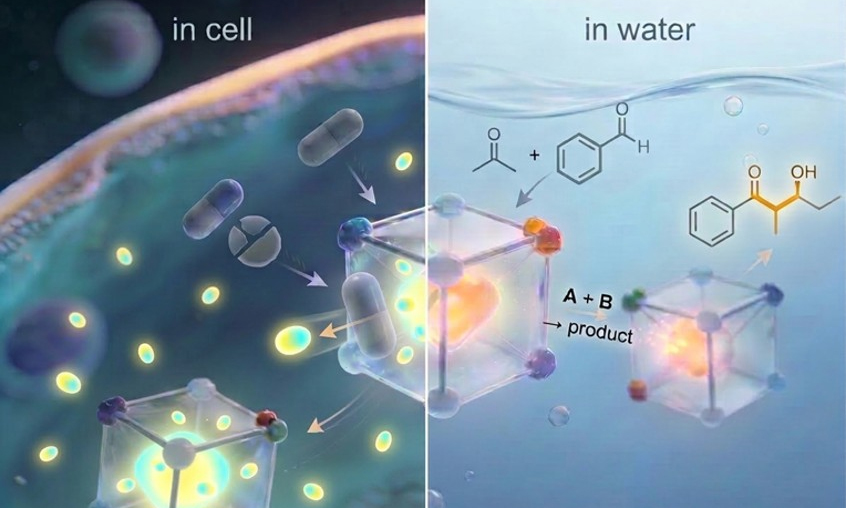
Synthetic nanomaterials have emerged as promising alternatives to natural enzymes for catalytic and therapeutic applications. Yet, their limited stability, aqueous compatibility, and catalytic scope impede broader utilization. Pierre Picchetti and his group have now developed biocompatible nanoparticles that provide a robust and sustainable platform for enzyme-like catalysis in water. Their activity can be switched on and off in the presence of chemical signals similar to how nature regulates enzymes. As the nanoparticles are free of metal and well tolerated by living cells, they are suitable for intracellular applications.
In nanotechnology, the design of biocompatible, chemically well-defined nanomaterials with precisely known single-particle composition that can operate in water and mimic enzyme functions is a key challenge with great potential for innovative solutions. The Picchetti Group has recently developed silicon-based nanoparticles that enable catalysis directly in water without additional performance enhancers. These nanomaterials can be produced in a sustainable way, that is, at large scale and in water. In collaboration with international partners, the team has also shown that these nanoparticles can activate a drug inside cancer cells, opening up promising opportunities for future chemotherapies.
The researchers have published their results in the journal Angewandte Chemie
doi.org/10.1002/anie.8446184